

Every second hoarding on the Yamuna Expressway now promises the same thing. Buy near the airport, wait, and watch the price climb. Some of that will come true. A lot of it will not, and the difference usually has nothing to do with the airport itself. If you are weighing commercial property near Jewar Airport, the smarter question is not how close a project sits to the terminal but who will walk past its shop fronts on an ordinary Tuesday.
Airports create demand in rings, not in a straight line
The land right next to an airport fills up with logistics parks, cargo sheds, hotels and warehousing. Those are big-ticket uses, mostly bought by large companies. A small investor looking for a retail shop or a food court unit rarely benefits from being two kilometres from a runway, because there is nobody there to shop.
Retail value tends to build one ring further out, in the places where people already live, study and work, and where the airport adds a fresh layer of traffic on top. In Greater Noida that ring includes the Pari Chowk belt, Knowledge Park and the sectors that sit on the main road links towards the expressway. These areas have colleges, residential societies and offices today, so a shop there earns from existing demand while the Noida International Airport story plays out in the background.
Footfall today beats a promise for tomorrow
When you visit a site, count people. Stand at the entrance for twenty minutes in the evening and see who passes, how many are students, how many are families, how many are office workers heading home. A project that already has a catchment can start earning rent soon after possession. A project in an empty patch of land is asking you to fund the waiting period yourself.
This is the main reason a lot of seasoned investors in the Greater Noida airport corridor prefer established sectors over plots marketed purely on airport proximity. The airport is a tailwind. It should not be the whole engine.
Road access decides who can reach the shop
Check how a buyer or tenant’s customers will actually arrive. A good commercial property near Jewar Airport should sit on a road wide enough for cars to stop, close to a public transport point, and on a route people use for daily errands rather than only for long drives. Yamuna Expressway commercial property can look attractive on a map, but an expressway is built for speed, and fast traffic does not stop to buy coffee.
A metro station within walking distance, a roundabout like Pari Chowk that already works as a meeting point, and service roads with parking are worth more to a shopkeeper than a shorter drive to the terminal.
Questions to ask the developer before you book
Ask for the UP RERA registration number and check it yourself on the UP RERA portal. Ask what kind of tenants the developer is planning for each floor, because a building with a clear mix of retail, food and offices tends to hold footfall through the day. Ask about parking, power backup and lift capacity, since those decide whether a brand will sign a lease. Ask for the payment plan in writing and read the stage-wise schedule slowly.
If the answers are vague, treat that as information too.
Timelines are the part most buyers skip
Infrastructure projects in India rarely run exactly to the first announced date. Roads open in stages, metro extensions get revised, and the commercial ecosystem around a new airport takes years to mature even after flights begin. None of that makes the opportunity smaller. It simply changes how you should plan.
Before buying, decide how long you can hold the property without depending on rent. If the honest answer is three years or more, you have room to ride out delays. If you need income in the first year, look harder at locations that already have a working catchment. In Greater Noida, that usually points to sectors near Pari Chowk and the metro rather than empty stretches further down the expressway.
It also helps to think about what kind of tenant the airport will actually bring. Airline and ground staff, logistics workers, hotel employees and business travellers all need food, pharmacies, phone shops and services close to where they live, which is often in established Greater Noida sectors rather than right beside the terminal.
Keep the paperwork as sharp as the pitch
Airport-linked marketing can be loud. The documents should be quiet and precise. Match the carpet area on the agreement with what you were shown, confirm the floor and unit number, and keep copies of every receipt. A clear paper trail protects you whatever happens to timelines around you.
Where Kamakhya Crosswalk fits in this picture
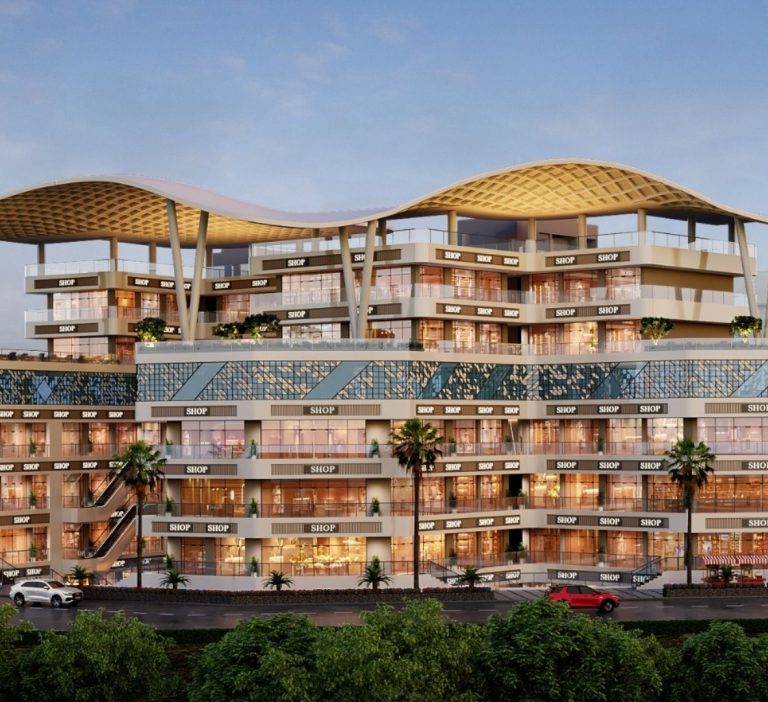
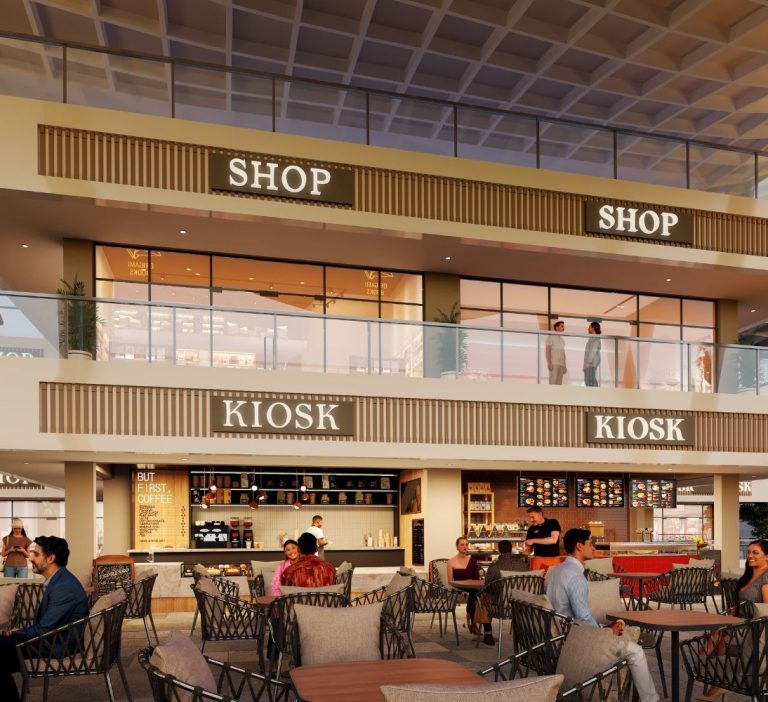
Kamakhya Crosswalk sits at LS-01, Sector P4, Greater Noida, close to Pari Chowk, near a metro station and linked to the road network that leads towards Noida International Airport. The project is a hi-street commercial development with retail shops on the lower ground and ground floors, retail on the first floor, a food court and restaurants on the second floor, offices on the fourth floor and a rooftop restaurant and leisure space on the fifth. It is registered with UP RERA under UPRERAPRJ547975/08/2024.
That mix matters. A building that serves shoppers, diners and office staff in one place does not depend on a single source of traffic, which is exactly the kind of resilience you want when the wider airport-led growth is still unfolding.
Also read
Book a site visit at Kamakhya Crosswalk
The best way to judge any commercial property near Jewar Airport is to stand in front of it. Call the Kamakhya Crosswalk team on +91 95400 64200, message on WhatsApp at the same number, or write to in**@****************rs.com to book a site visit and get current availability and floor plans.

 WhatsApp