

Most people who ask about a food court shop in Greater Noida start with the size of the counter. That is the wrong first question. A food court unit lives or dies on where hungry people already are at one in the afternoon and eight at night, and on whether they can sit down within twenty steps of your counter.
That sounds obvious. It gets ignored all the time, because brochures sell square feet and food businesses run on seconds.
Why a food court behaves differently from a regular shop
A fashion store can survive a slow Tuesday and make it back on Saturday. A food counter cannot store its sales that way. Batter goes sour, paneer goes off, and staff still need paying. So the steady, boring daily crowd matters more than the weekend rush.
In a mixed commercial building, that steady crowd comes from three places. Office workers on upper floors who need lunch without driving anywhere. Shoppers who have been walking for an hour and want to sit. Families from nearby housing societies who come for one errand and stay for a snack. A food court that pulls from all three has a much flatter, safer week than one that depends on only weekend visitors.
Reading the floor plan like a food operator
Ask for the actual floor layout of the food court level, not the rendered photo. Then look for a few specific things.
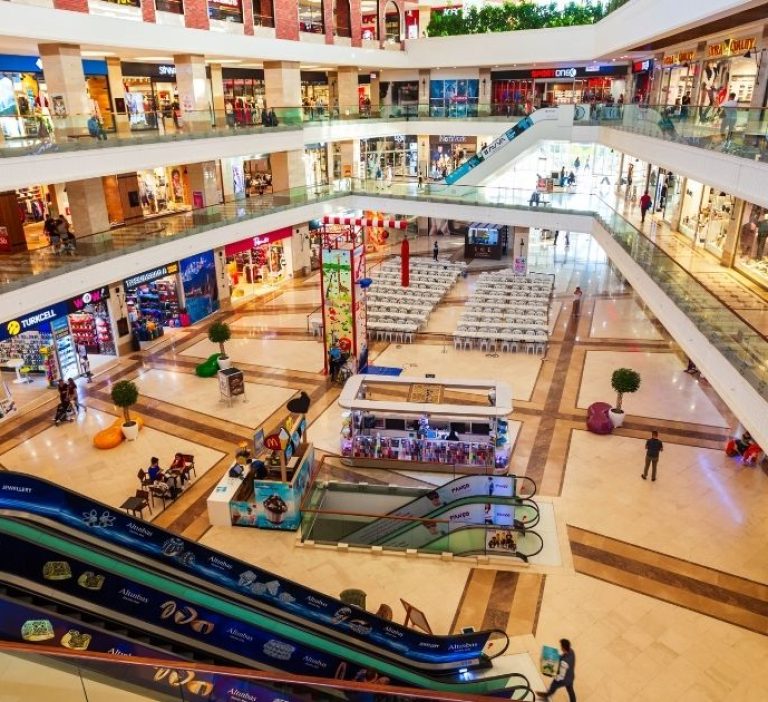
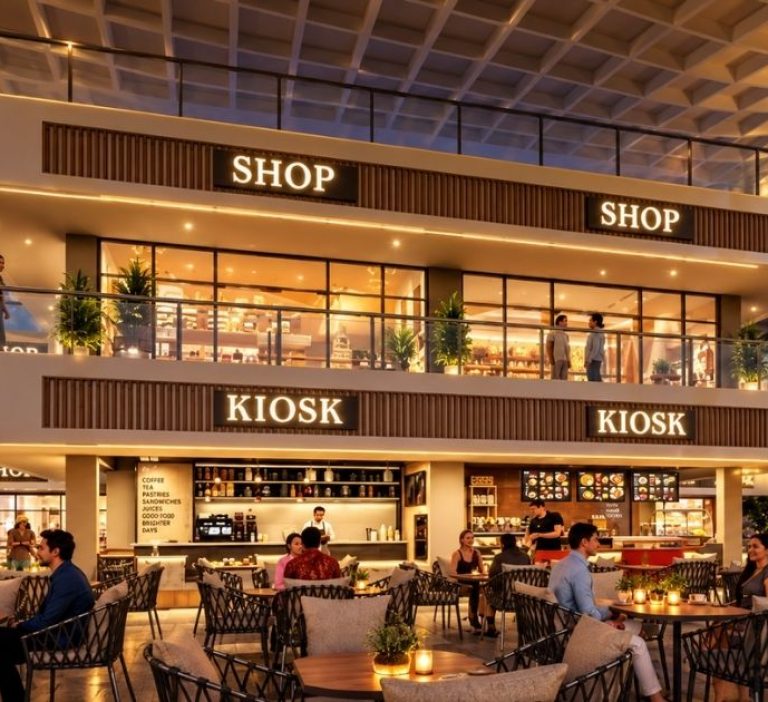
Where is the common seating, and which counters face it directly? A counter that a seated customer can see from their chair gets repeat orders, the second chai, the dessert after the meal. A counter tucked around a pillar gets only the people who came looking for it.
Where do the escalators and lifts open? The first two or three counters a person sees after stepping out tend to catch the undecided crowd. That is worth a premium, and it is fair to weigh it.
Where are the water points, wash areas and exhaust routes? A kitchen without a sensible exhaust path becomes a fight with the building management within months. Ask early, not after the fit-out has started.
Food stall in a commercial complex, the operating questions to settle first
Before you sign, get clear answers on the boring parts. What are the operating hours allowed for the food court floor? Is gas piped or cylinder based, and who handles safety approvals? How is common seating cleaned and who pays for it? Is there a separate service lift for supplies so your vendor is not wheeling crates past shoppers?
None of these appear in a sales brochure. All of them show up in your monthly costs and your customer reviews.
Restaurant space in Greater Noida versus a single counter
There is a real choice between a full restaurant unit and a food court counter. A restaurant gives you your own seating, your own ambience and higher ticket sizes, but you carry the whole fit-out and staffing load. A counter in a shared food court costs less to set up and borrows the seating and the crowd from the building, though you share that crowd with every neighbour.
For a first outlet, or for a brand testing a new area, the counter is usually the smarter starting point. You learn what sells in this locality without betting a full dining room on it. Once the numbers are proven, moving up to a standalone restaurant is a much calmer decision.

Where Kamakhya Crosswalk fits
At Kamakhya Crosswalk in Sector P4, the second floor is planned as a food court and restaurant level, and the fifth floor as a rooftop restaurant and leisure space. Below them sit retail floors for daily essentials, brand showrooms, fashion and electronics, with office spaces on the fourth floor. That stacking matters for a food business, because shoppers and office staff are already in the building when hunger hits.
The project also lists parking, outdoor seating, backup power, 24/7 security with CCTV and high-speed lifts among its amenities. For a food tenant, backup power alone can be the difference between a ruined freezer and a normal evening.
A small test before you commit
Visit at lunchtime on a weekday and again on a Sunday evening. Count, roughly, how many people walk past the spot you are considering in ten minutes. It is a crude number, but it is your number, and it beats any projection on paper.
Common mistakes first-time food tenants make
The most frequent one is overbuilding the kitchen. A new operator installs a six-burner range, a large tandoor and a walk-in chiller, then finds the menu that actually sells needs half of that. Start with the equipment your top eight dishes require, and add only when the sales ask for it.
The second is a menu that is too long. In a food court, people decide in seconds while standing in front of a board. Twelve clear items with photographs sell better than forty items in small print. Long menus also mean more raw material sitting in your fridge, and more of it going to waste.
The third is ignoring the hours just before and after meals. A counter that offers tea, coffee, sandwiches and snacks between four and six in the evening can earn a meaningful share of its day from people who are not looking for a full meal. That slot is often empty in food courts, which makes it easier to own.
Finally, many operators forget about delivery. A counter inside a busy building can also run on delivery apps for the surrounding housing societies, using the same kitchen. Check with building management that delivery riders have a sensible pickup point, so they do not crowd the seating area and annoy dine-in guests.
Also read
Book a Site Visit at Kamakhya Crosswalk
If you are weighing a food court counter or restaurant space, the Kamakhya Crosswalk team can walk you through the food court floor and show the counter positions in person. Kamakhya Crosswalk is at LS-01, Sector P4, Greater Noida, UP RERA number UPRERAPRJ547975/08/2024. Call or WhatsApp +91 95400 64200, or email in**@****************rs.com to book a site visit.

 WhatsApp