

It is a common complaint at possession time. The shop feels smaller than the number on the allotment letter. Usually nobody has cheated anyone. The buyer was quoted one kind of area and imagined another.
Commercial property in India is still often discussed in terms of super area, while the space you can actually stand in, put shelves in and serve customers in is the carpet area. Knowing the difference before you sign saves a lot of disappointment later.
Carpet area is the floor you can use
Under the RERA Act, carpet area means the net usable floor area of a unit, measured inside the walls. It leaves out the thickness of external walls, service shafts and shared spaces outside your unit. For a shop owner, this is the honest number. It decides how many racks fit, how big the counter can be and how many customers can browse at once.
RERA requires developers to state the carpet area in the agreement, so ask to see that figure in writing for every unit you shortlist.
Super area adds a share of the common spaces
Super area, often called super built up area, starts with the carpet area and then adds the walls plus a proportionate share of common areas. Corridors, lobbies, lift wells, staircases, toilets, the atrium and sometimes parts of the services area all get spread across every unit in the building.
That is not unfair in itself. Customers need those corridors and lifts to reach your shop. The problem is only when buyers compare one project’s super area with another project’s carpet area and think they have found a bargain.
The loading factor tells you how much is shared
The gap between the two numbers is usually described as loading. If a unit has a super area quoted at one figure and the carpet area works out much lower, the loading is high. Commercial buildings with large atriums, food courts and wide corridors tend to carry more loading than a simple row of street shops.
High loading is not automatically bad. A wide, well-lit corridor that keeps footfall moving past your shop has real value. A huge lobby that nobody uses does not. Walk the common areas and judge whether the space you are paying a share of will actually help your business.
How to compare two shops fairly
Put every shortlisted unit on the same basis. Ask each developer for the carpet area, then work out the price per square foot of carpet area rather than the quoted rate. The project that looked cheaper on super area can turn out to be the more expensive one once you do this.
Also measure frontage. Two shops with the same carpet area can perform very differently if one has a wide glass front on the main corridor and the other is deep and narrow with a small door.

Maintenance charges follow the bigger number
One detail many buyers miss is that monthly maintenance in commercial buildings is often billed on super area. So a high loading affects not only the purchase cost but also what you pay every month for as long as you hold the unit. Ask how maintenance is calculated and on which area before you book.
Checking the numbers at Kamakhya Crosswalk
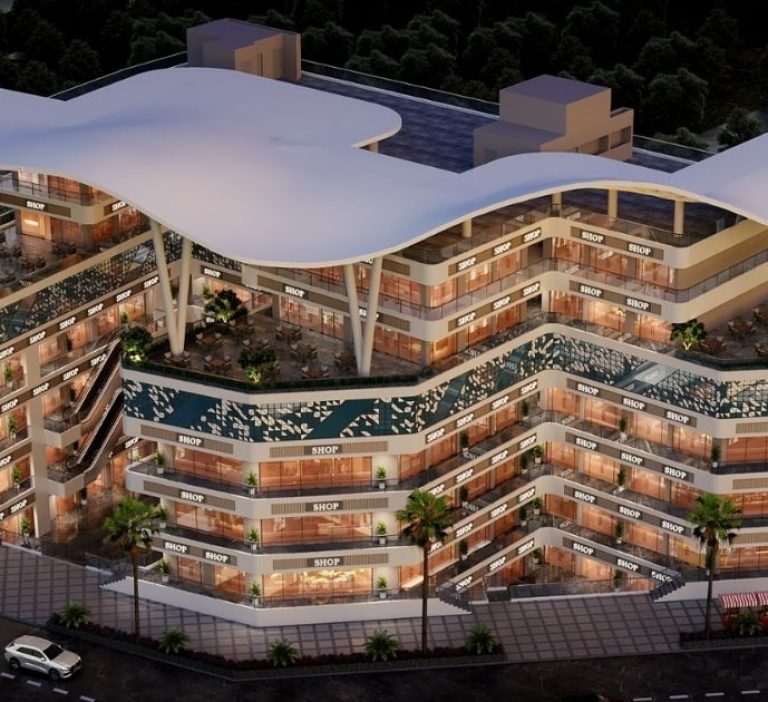
At Kamakhya Crosswalk, LS-01, Sector P4, Greater Noida, ask the team for the carpet area of each unit you like along with its floor plan. The building plans retail on the lower ground, ground and first floors, a food court and restaurants on the second, offices on the fourth and a rooftop restaurant on the fifth, so the common spaces serve very different kinds of visitors. Walk them yourself and decide what they are worth to your business.
Also read
Book a Site Visit at Kamakhya Crosswalk
Take a measuring tape and the floor plan to your site visit. Call or WhatsApp +91 95400 64200 or email in**@****************rs.com to book a visit to Kamakhya Crosswalk, LS-01, Sector P4, Greater Noida. UP RERA number UPRERAPRJ547975/08/2024.


 WhatsApp